The Academy of Empty Seats

The Academy of Aurelis claimed that anybody could enter.

This was true.

Its gates were never locked.

Above them were carved the words:

TALENT WILL FIND ITS WAY.

Every year thousands travelled to Aurelis for the Examination.

Yet the examination room contained only one hundred chairs.

Nobody found this strange.

The Academy explained that excellence was rare.

A girl named Veya arrived from a fishing village.

She had studied beneath the lamps of her father’s boat.

When she reached the Academy, an attendant stopped her.

“Preparation certificate?”

“I don’t have one.”

“You may still enter.”

Veya smiled.

“Thank you.”

“But applicants without certificates sit in the rear section.”

At another desk she was asked for recommendations.

“My teacher wrote one.”

The attendant inspected the name.

“I don’t recognise him.”

“Does that matter?”

“No.”

He placed her application in a grey folder.

Another applicant arrived.

The attendant recognised his surname immediately.

His folder was gold.

Veya noticed.

“I thought everyone took the same examination.”

“They do.”

Inside, she discovered that some students already knew the format.

Some had spent years practising with former examiners.

Some recognised the examples.

Some knew which answers the Academy considered elegant.

Veya still performed brilliantly.

Weeks later, she received a letter.

EXCEPTIONAL POTENTIAL.

UNFORTUNATELY, WE CANNOT OFFER YOU A SEAT.

She returned the following year.

And the next.

Eventually she stopped applying.

Years passed.

Veya became a teacher.

One afternoon a former Academy examiner visited her village.

He watched her students solving problems.

“Extraordinary,” he said.

“Several of these children belong at Aurelis.”

Veya looked at him.

“They already belong somewhere.”

He misunderstood.

“I mean they have the ability.”

“So did many people.”

The examiner became uncomfortable.

“The Academy cannot accept everyone.”

“I know.”

“Then selection is necessary.”

“I know.”

“What are you objecting to?”

Veya thought.

“The Academy keeps calling the people it selects exceptional.”

“They are.”

“But you never meet everyone you excluded before the examination even begins.”

The examiner said nothing.

Years later, Aurelis commissioned a magnificent new hall.

One thousand chairs.

At the opening ceremony, the director called it an expansion of opportunity.

Veya was invited.

She walked through the enormous room.

Hundreds of chairs remained empty.

“Why aren’t they filled?” she asked.

“We could not find enough qualified candidates.”

Veya looked toward the open gates.

Outside stood thousands.

For the first time, somebody asked whether an open gate mattered if the road leading to it had already decided who could arrive.

A
ARISE STORIES · SOCIAL EXPERIMENT

Would You Admit Them?

The Academy of Aurelis has five exceptional applicants and only two remaining seats. Today, you make the decision.

TALENT WILL FIND ITS WAY. Every applicant has been assessed according to the same academic standards. Review the records and award the final two seats.
FINAL ADMISSIONS REVIEW

Five applicants. Two seats.

You have only the information normally presented as evidence of achievement.

FILE 01

Ari

Exceptional examination results
Advanced academic preparation
Strong recommendations
SCORE 96
FILE 02

Veya

Excellent examination results
Independent study
Strong teacher assessment
SCORE 91
FILE 03

Nilo

Very strong examination results
Leadership experience
Community involvement
SCORE 93
FILE 04

Sera

Exceptional examination results
Extensive extracurricular record
Distinguished preparation
SCORE 97
FILE 05

Toma

Excellent examination results
Strong independent portfolio
Consistent academic progress
SCORE 90
Which two applicants receive the seats?
ACADEMY OF AURELIS · FINAL DECISION
SELECTED

You awarded the two seats.

You used the evidence available to you. Scores, preparation, achievement and recommendations helped you decide.

But an admissions file can contain accurate information while still leaving important information invisible.

THE FILES OPEN

The scores did not change.

The people did not change either. You simply received more information about what producing those achievements required.

FILE 01 Ari
Score 96 · Advanced preparation
Ari received years of private preparation from specialists familiar with the Academy examination.
FILE 02 Veya
Score 91 · Independent study
Veya studied independently with limited specialist preparation and fewer educational resources.
FILE 03 Nilo
Score 93 · Leadership and community involvement
Nilo worked long paid hours alongside study and completed much of the application process late at night.
FILE 04 Sera
Score 97 · Extensive extracurricular record
Sera attended a highly resourced school where specialist preparation, activities and application support were readily available.
FILE 05 Toma
Score 90 · Independent portfolio
Toma regularly cared for younger family members while studying and built the portfolio around those responsibilities.
THE SECOND QUESTION

Did context change how you interpreted achievement?

Nothing here automatically determines who deserves admission. Context is not a reverse ranking system. It changes what the visible numbers are able to tell you.

THE GATES ARE OPEN
WOULD YOU ADMIT THEM? · COMPLETE
?

An open gate does not tell you whether everyone had the same road to reach it.

A score can tell you something real about what somebody achieved. It may tell you much less about the resources, responsibilities, preparation and opportunities surrounding that achievement.

A score tells you what somebody achieved. Context may tell you something about what achieving it required.

Fairness does not necessarily mean ignoring achievement. It may require understanding what our measurements reveal, what they conceal, and who had the opportunity to become measurable in the first place.


SHARE THE EXPERIMENT

Would somebody else choose differently?

Share this page on Facebook, then select and copy your result above if you want to add your reflection to the post.
Arise Stories SIGNALS FOR PEOPLE NAVIGATING MODERN LIFE
  • When Presence Is Enough
  • Thread of Worthiness
  • LGBTQ+
  • Family
  • Work & Career

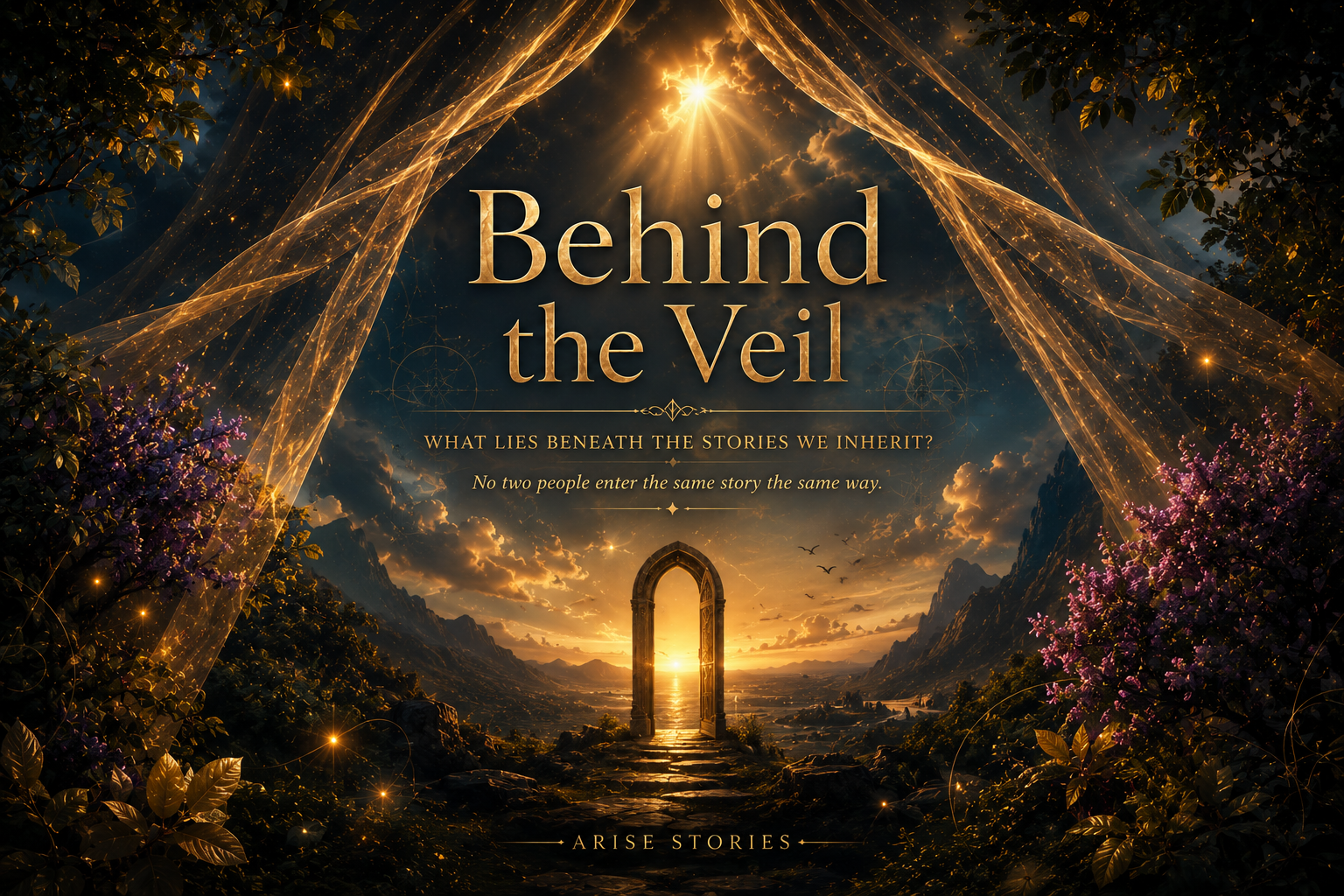
Behind the Veil

What lies beneath the stories we inherit?

No two people enter the same story the same way.

Behind the Veil is an interactive reflection quiz that turns familiar ideas about identity, power, belonging, work, culture, technology, relationships, and modern life into questions worth pausing over. Rather than telling you what to think, it invites you to notice which patterns you already recognise, where your assumptions are challenged, and what may deserve a closer look.

Benefit to you

See the patterns shaping your perspective.

The questions and explanations can help you test what you know, recognise influences that often remain invisible, and build a clearer language for understanding your own identity and the systems around it.

Benefit to others

Bring more awareness into the conversations you share.

Greater awareness can change how we listen, question assumptions, and respond to lives different from our own. What you recognise here may help you approach other people with more curiosity, fairness, and human understanding.

🎲 10 random questions
🧠 1,100 questions
📚 Multiple themes
⭐ Earn your title
Question 1 / 10 Category

Behind the Veil achievement card

Next Step
Share your result:

  • The Biography You Edit Before Entering the Room

  • Not Every Friendship Needs to Become More Efficient

    Not Every Friendship Needs to Become More Efficient

    Modern life teaches us to optimise almost everything, including relationships. Friendship may be one of the places where time is still allowed to be spent rather than invested.

  • The Home That Keeps Happening Without You

    The Home That Keeps Happening Without You

    Returning home can reveal something migration hides: the place you left kept living too. Belonging may survive even when neither you nor home remained unchanged.

  • The Box Marked KEEP

    The Box Marked KEEP

    Packing looks like a practical decision about possessions. Sometimes it is a private negotiation over which versions of yourself are allowed to come with you.

  • The Places Where You Suddenly Notice Your Class

    The Places Where You Suddenly Notice Your Class

    The Places Where You Suddenly Notice Your Class Sometimes class announces itself through money. Sometimes it arrives through a fork. You enter a restaurant and quietly watch which glass somebody else…

  • Who Owns the Hours Nobody Gets Paid For?

    Who Owns the Hours Nobody Gets Paid For?

    Some work becomes invisible precisely because it succeeds. The appointment is remembered, dinner appears, the dishes disappear and somebody keeps noticing what needs to happen next. But whose time is assumed…

  • Nobody Warns You That Friendship Ages Too

    Nobody Warns You That Friendship Ages Too

    Some friends know everything about who we were and surprisingly little about who we are becoming. Perhaps lasting friendship requires more than remembering together. It requires continuing to meet each other.

  • The Things We Buy for the Person We Hope to Become

    The Things We Buy for the Person We Hope to Become

    Sometimes we do not buy an object because we need it. We buy it for the person we imagine becoming once we own it. What changes when purchasing begins to feel…

  • Your Feed Is Learning You While You Are Learning Yourself

    Your Feed Is Learning You While You Are Learning Yourself

    We often talk about algorithms learning our interests. Less often do we ask how repeated recommendations teach us what to believe our interests are.

  • One Day Your Home Starts Remembering You

    One Day Your Home Starts Remembering You

    Sometimes letting go of an object means negotiating with a version of ourselves that once needed it. A reflection on aging, home, memory and what remains ours after the physical evidence…

  • You May Not Be Lost

    You May Not Be Lost

    Maybe you never lost yourself. Maybe parts of you simply learned to become quieter. A short reflection on influence, adaptation and the permission we continue waiting for.

Discover more from

Subscribe now to keep reading and get access to the full archive.

Continue reading