The Village Where Shadows Were Sold

In a village between the mountain and the sea, everyone was born with a shadow.

Some were enormous. Some barely touched the ground. Some danced when their owners stood still. Some pointed east while the sun was setting west.

Nobody considered this particularly interesting until a merchant arrived.

He unfolded a purple tent in the marketplace, arranged several mirrors around it and hung a golden sign above the entrance.

BETTER SHADOWS

The villagers laughed.

The merchant did not.

He explained that although everyone possessed a shadow, very few people possessed the right one.

Successful people, he said, had narrow shadows.

Beautiful people had smooth shadows.

Trustworthy people had shadows that remained directly behind them.

Important people, apparently, had exceptionally long ones.

Nobody bought anything that morning.

By sunset, one person had.

The following day everyone noticed how elegant his new shadow looked.

By the end of the month, half the village had visited the merchant.

People began comparing shadows in the street.

Children practised standing in ways that made theirs appear smaller. Young people waited for sunset to photograph theirs against beautiful walls. Couples argued because one person’s shadow attracted more admiration than the other’s.

Eventually employers began quietly preferring applicants with conventional shadows.

Nobody remembered who had suggested that shadows mattered.

They simply did.

Years passed.

One evening, a child saw an old woman walking toward the forest.

Her shadow was enormous.

Crooked.

In places it appeared to split into three.

The child ran after her.

“Why have you not fixed it?”

The woman stopped.

“Fixed what?”

“Your shadow.”

She turned around to inspect it.

“That thing?”

“Yes.”

The woman laughed.

“It has followed me through three countries, two marriages, four jobs, one revolution and seventy three years. It knows more about being me than that merchant ever will.”

The child had never heard anyone speak about a shadow affectionately.

So the child followed her.

They walked beyond the last house, beyond the road and finally beneath the trees.

There the marketplace lights could no longer reach them.

Something terrible happened.

Their shadows disappeared.

The child screamed.

“Mine is gone!”

The woman continued walking.

“Where did it go?”

“Nowhere.”

“But I cannot see it.”

The old woman smiled.

“That is not the same thing.”

They sat beneath an enormous tree.

Without a shadow available for inspection, the child began noticing other things.

Insects glowing between roots.

The smell of wet earth.

A bird calling from somewhere invisible.

The astonishing number of stars that existed beyond the marketplace lights.

And how strange it felt to exist without being able to examine the evidence of existing.

The following morning, the child returned to the village.

The merchant was opening his purple tent.

He spotted the child immediately.

“You are getting older,” he said. “Soon people will notice your shadow.”

The child looked down.

It was there again.

Small.

Uneven.

Entirely ordinary.

“I can improve it for you.”

“No, thank you.”

The merchant seemed surprised.

“Do you not want a better shadow?”

The child thought about the forest.

“No.”

“Why?”

The child looked at all the villagers passing through the marketplace, each checking the ground occasionally to see how they appeared.

Then looked back at the merchant.

“Because I discovered it only looks wrong when I am comparing it.”

And walked away.

The merchant remained.

His business did not close.

There would always be customers.

But from that morning onward, there was also a small path leading out of the marketplace and into the forest.

And every so often, someone followed it.

  • When Presence Is Enough
  • Thread of Worthiness
  • LGBTQ+
  • Family
  • Work & Career

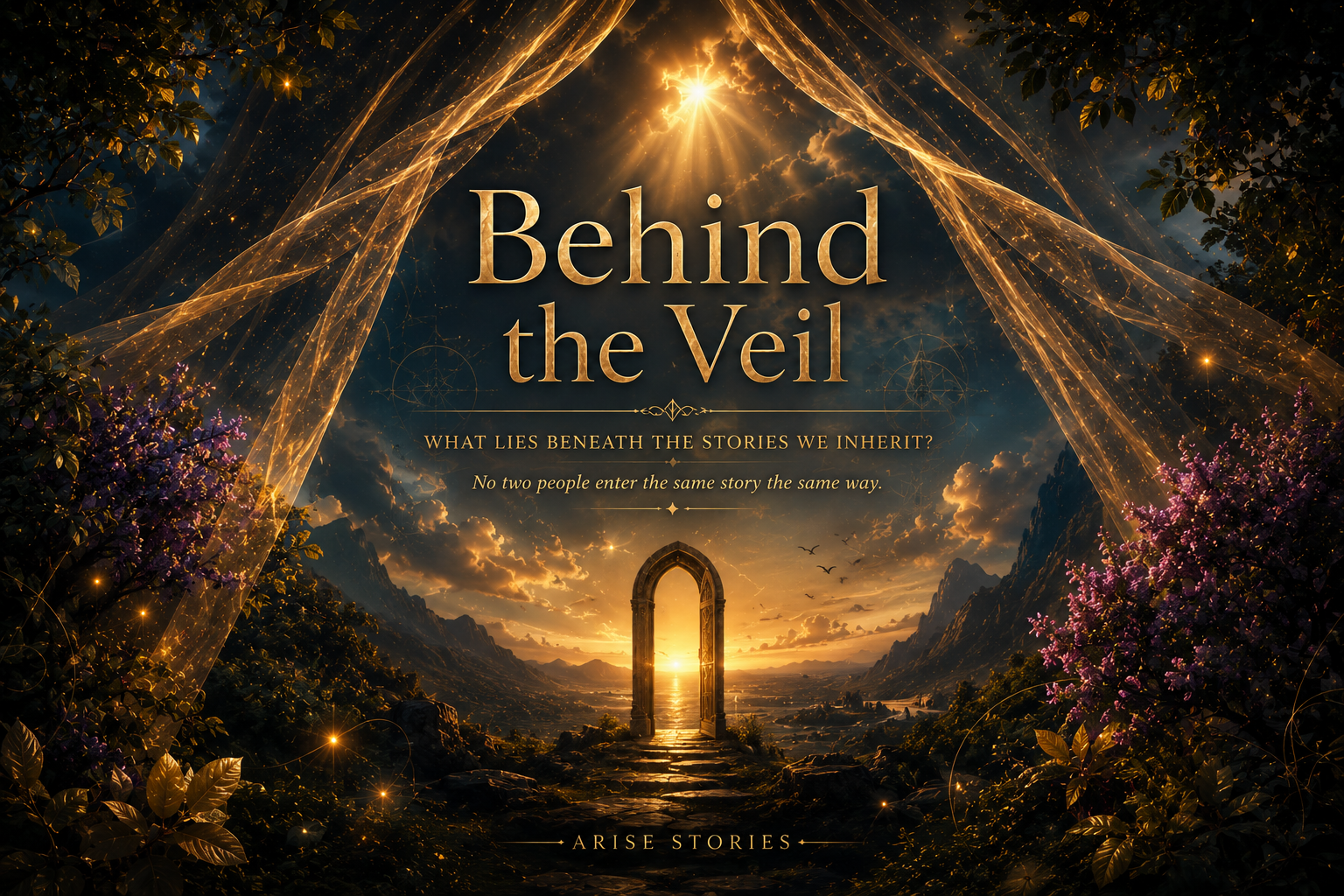
Behind the Veil

What lies beneath the stories we inherit?

No two people enter the same story the same way.

Behind the Veil is an interactive reflection quiz that turns familiar ideas about identity, power, belonging, work, culture, technology, relationships, and modern life into questions worth pausing over. Rather than telling you what to think, it invites you to notice which patterns you already recognise, where your assumptions are challenged, and what may deserve a closer look.

Benefit to you

See the patterns shaping your perspective.

The questions and explanations can help you test what you know, recognise influences that often remain invisible, and build a clearer language for understanding your own identity and the systems around it.

Benefit to others

Bring more awareness into the conversations you share.

Greater awareness can change how we listen, question assumptions, and respond to lives different from our own. What you recognise here may help you approach other people with more curiosity, fairness, and human understanding.

🎲 10 random questions
🧠 1,100 questions
📚 Multiple themes
⭐ Earn your title
Question 1 / 10 Category

Behind the Veil achievement card

Next Step
Share your result:

  • The Biography You Edit Before Entering the Room

  • Not Every Friendship Needs to Become More Efficient

    Not Every Friendship Needs to Become More Efficient

    Modern life teaches us to optimise almost everything, including relationships. Friendship may be one of the places where time is still allowed to be spent rather than invested.

  • The Home That Keeps Happening Without You

    The Home That Keeps Happening Without You

    Returning home can reveal something migration hides: the place you left kept living too. Belonging may survive even when neither you nor home remained unchanged.

  • The Box Marked KEEP

    The Box Marked KEEP

    Packing looks like a practical decision about possessions. Sometimes it is a private negotiation over which versions of yourself are allowed to come with you.

  • The Places Where You Suddenly Notice Your Class

    The Places Where You Suddenly Notice Your Class

    The Places Where You Suddenly Notice Your Class Sometimes class announces itself through money. Sometimes it arrives through a fork. You enter a restaurant and quietly watch which glass somebody else…

  • Who Owns the Hours Nobody Gets Paid For?

    Who Owns the Hours Nobody Gets Paid For?

    Some work becomes invisible precisely because it succeeds. The appointment is remembered, dinner appears, the dishes disappear and somebody keeps noticing what needs to happen next. But whose time is assumed…

  • Nobody Warns You That Friendship Ages Too

    Nobody Warns You That Friendship Ages Too

    Some friends know everything about who we were and surprisingly little about who we are becoming. Perhaps lasting friendship requires more than remembering together. It requires continuing to meet each other.

  • The Things We Buy for the Person We Hope to Become

    The Things We Buy for the Person We Hope to Become

    Sometimes we do not buy an object because we need it. We buy it for the person we imagine becoming once we own it. What changes when purchasing begins to feel…

  • Your Feed Is Learning You While You Are Learning Yourself

    Your Feed Is Learning You While You Are Learning Yourself

    We often talk about algorithms learning our interests. Less often do we ask how repeated recommendations teach us what to believe our interests are.

  • One Day Your Home Starts Remembering You

    One Day Your Home Starts Remembering You

    Sometimes letting go of an object means negotiating with a version of ourselves that once needed it. A reflection on aging, home, memory and what remains ours after the physical evidence…

  • You May Not Be Lost

    You May Not Be Lost

    Maybe you never lost yourself. Maybe parts of you simply learned to become quieter. A short reflection on influence, adaptation and the permission we continue waiting for.

Discover more from

Subscribe now to keep reading and get access to the full archive.

Continue reading